Consent or Coercion
The Legitimacy Spiral in Immigration Enforcement


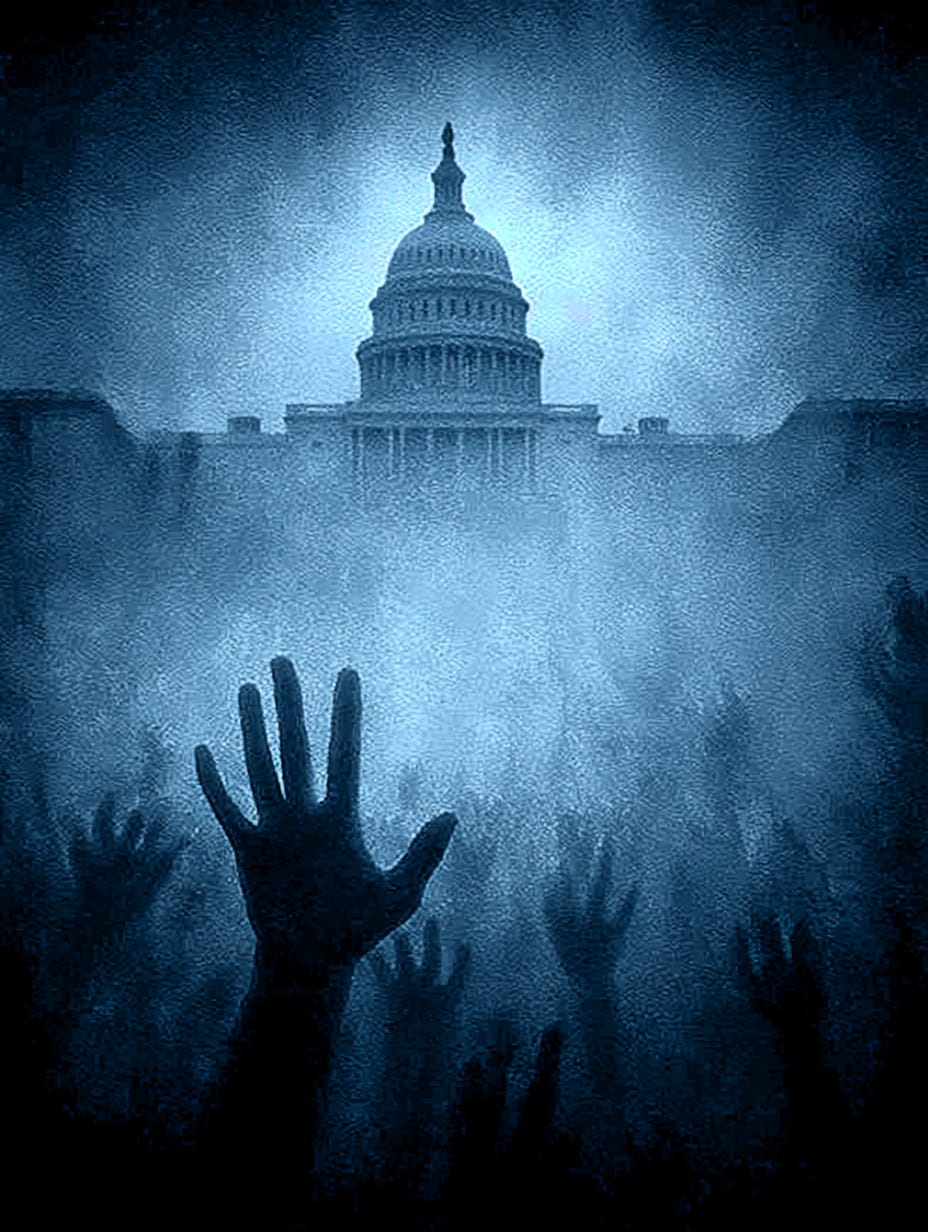
There are two ways to run law enforcement in a democracy. You can govern by consent where the public believes you are operating within rules, with restraint, and with accountability. Or you can govern by coercion, relying on fear, opacity, and force to get compliance.
Immigration enforcement is a stress test for that choice, because it happens in public spaces, involves high discretion, and affects communities that often have less political power.
When it’s done carefully, it can be strict and still legitimate. When it’s done recklessly, it spreads fear far beyond its targets, breaks trust in government, and escalates conflict.
That’s why what’s unfolding across Minnesota, Chicago, and federal detention sites is no longer “a few isolated incidents.” It’s the story of a coercive system expanding faster than the oversight and consent required to keep it legitimate.
In Minnesota, police chiefs and sheriffs have publicly described a surge of complaints from U.S. citizens who say they’ve been stopped without cause and pressured to prove they’re legally in the country. They describe the same thing happening to off-duty officers who say they were stopped and treated like suspects.
DHS disputes key details and says it has no record of certain incidents. But that denial doesn’t solve the problem. If local law enforcement leadership is making on-the-record allegations of civil-rights harms, then either the incidents happened and require accountability, or they didn’t happen and the federal agency should be able to rebut them with records, logs, and evidence.
“No record” is not a comforting answer when armed federal operations are interacting with civilians. It’s a sign of weak control, weak transparency, or both.
Minnesota’s Attorney General and the cities of Minneapolis and St. Paul have taken the conflict to federal court, seeking to halt the surge.
Courts force a paper trail. Claims become declarations and exhibits. Facts become testable. And the core question becomes unavoidable: is this enforcement being conducted within the limits the Constitution and federal law demand?
In Chicago, a woman was shot multiple times by a Border Patrol agent after a confrontation that DHS described in dramatic terms. Her attorney later pointed to surveillance video he says contradicts the official claim that agents were boxed in by multiple cars. Federal prosecutors subsequently moved to dismiss charges against her.
A modern accountability battle is unfolding where the state makes a claim; video and records challenge it; the public watches which version survives contact with evidence. That dynamic is exactly why filming has become so central in places like Minnesota. When internal accountability is slow and self-protective, visibility becomes the public’s last check.
At detention the state’s power is at its purest, because the detainee can’t walk away. In a custody-death case near El Paso and Fort Bliss, reporting indicates preliminary findings described as asphyxia due to neck and chest compression, raising the prospect of homicide pending further results.
When a person dies under government control, the government controls the scene, the timeline, the witnesses, and the records. In that context, transparency and independent investigation are the minimum. When the state asks the public to trust its own account of a death it controlled, skepticism becomes a civic responsibility.
We must remember that bureaucracy can do as much harm as a baton.
ICE’s own health services pages show a disruption in how detainee medical claims are processed, instructing providers to hold claims for months and pointing to an April 2026 date for claims processing to resume. Another portal indicates that a previous processing route ended and claims were denied after a cut-off.
This is not a paperwork story. In detention, the government controls access to care. Detainees can’t choose another provider. They can’t just go to urgent care. If payment systems break, services predictably get delayed or denied.
Even if no one intends cruelty, the structure produces it.
The public should understand what this means: you can harm people at scale without any dramatic scene, just by breaking or freezing the systems that deliver basic necessities.
No one is safe.
Now reports describe Cubans in Florida being deported in record numbers, shocking communities that historically believed they had special political shelter.
Predictably, as coercive systems expand. Broad discretion gets used broadly. A machine built for “them” rarely stays limited to “them.” It eventually reaches whoever is convenient, whoever is vulnerable, or whoever lacks the paperwork the system demands.
These pieces are part of the same spiral we are watching.
When enforcement surges, street encounters multiply. When encounters multiply, mistakes and escalations become more likely. When fear spreads, people stop cooperating with federal agents, local police, schools, and public institutions. When cooperation drops, legitimacy collapses. And when legitimacy collapses, the state must rely on even more force to achieve the same results.
The state and it’s media apparatus are working overtime to make this an immigration enforcement story. It’s not. This is about the rule of law in a democracy and determining if the government’s actions are legitimate.
Accountability: If agents are stopping people, there should be clear standards, supervisory review, and auditable reporting, aggregated for safety, and detailed enough to reveal patterns.
Transparency: No propaganda. There must be mandatory recording and preservation for any enforcement contact involving detention, weapons drawn, or force.
Verification: Automatic independent investigations for shootings, serious injuries, and deaths in custody. When the state controls the scene, the state cannot be the only storyteller.
Duty: the State has a duty to provide detainee medical care during claims-processing disruptions. Providers can’t be financially forced to deny services and detainees aren’t punished by administrative failure.
Those demands are the basic operating standards a legitimate law enforcement system requires.
From Minnesota streets to Chicago video to detention deaths to medical care, if the government cannot show it’s acting with restraint, transparency, and accountability, then it loses the public’s trust, and must be impeached, fired, and replaced with a government accountable to the people.
In a democracy, the people are not an obstacle to law enforcement. The people are the source of its legitimacy.
When an agency forgets that, and treats communities like territory rather than citizens, it loses legitimacy and becomes a rogue occupying force.
Source:
Report: Migrant’s death at Fort Bliss detention center likely ruled homicide
ICE Has Stopped Paying Contractors for Detainee Medical Treatment – Mother Jones
Minnesota police chief says ICE stopped off-duty officer at gunpoint
ICE Asked Off-Duty Cops to Prove Citizenship, Minnesota Police Chief Says - Newsweek
Minnesota officials sue to block Trump’s immigration crackdown as enforcement intensifies
Minnesota sues Trump administration to block immigration agents deployment
Footage allegedly shows vehicles involved in Brighton Park Border Patrol shooting - YouTube
DHS says federal agents shot armed woman in Chicago - YouTube
Medical examiner rules migrant’s death at Camp East Montana a homicide
Cubans in Florida Are Being Deported in Record Numbers - The New York Times
Cuban Deportations And Trump Divide Miami’s Latino Community - Grand Pinnacle Tribune
How ICE grew to be the highest-funded U.S. law enforcement agency | Wyoming Public Media
Contributor: Voters wanted immigration enforcement, but not like this - Los Angeles Times
NYT Op-Ed Drops a New Name for Trump’s Immigration Enforcement Agenda. It’s Embarrassing.
 | A guest post by
|